IS THERE A RIGHT WAY TO WORSHIP?
(This essay is from a blog article that I posted on July 5, 2013. I'm deleting that old blog site, so I'm preserving the article here.)
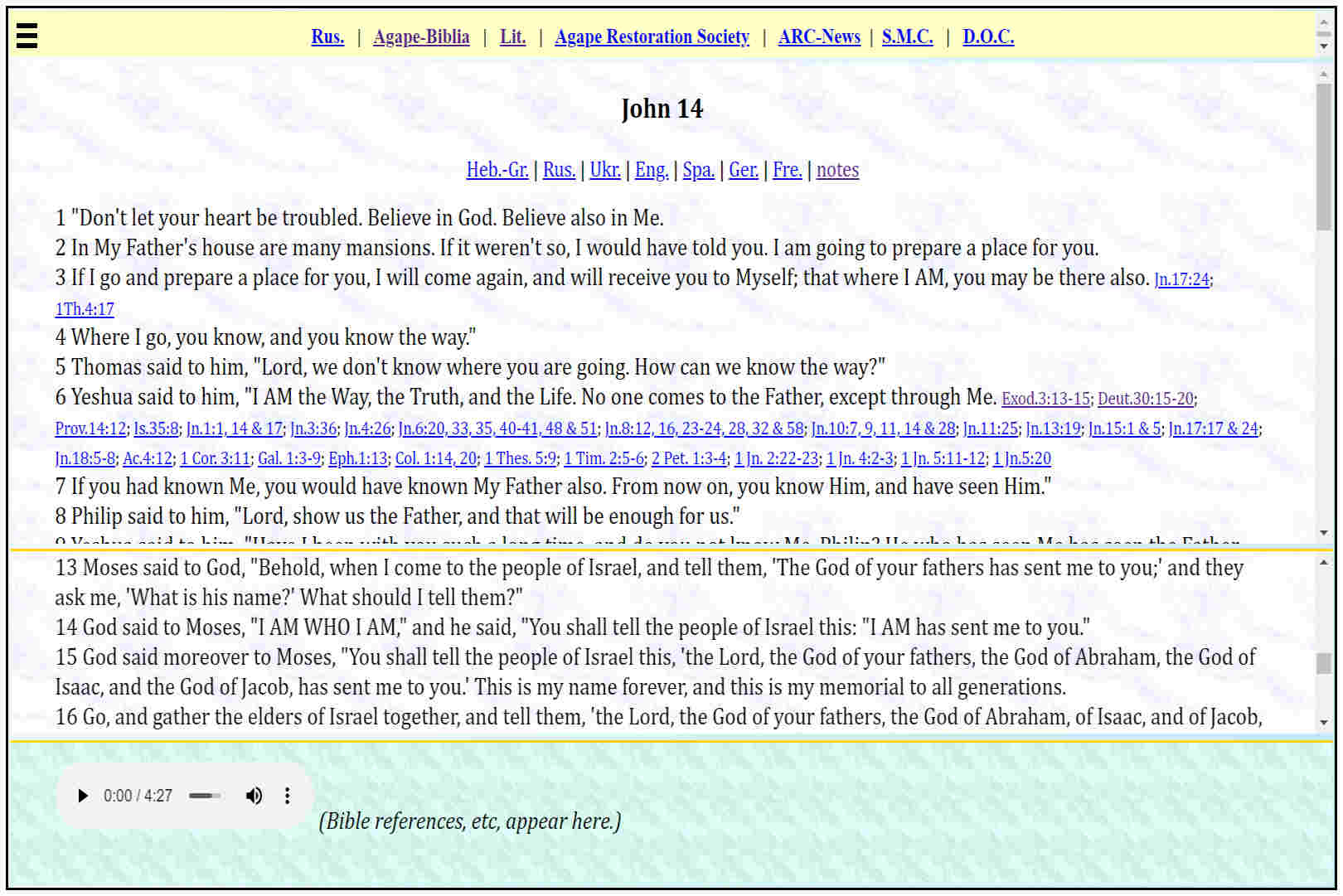
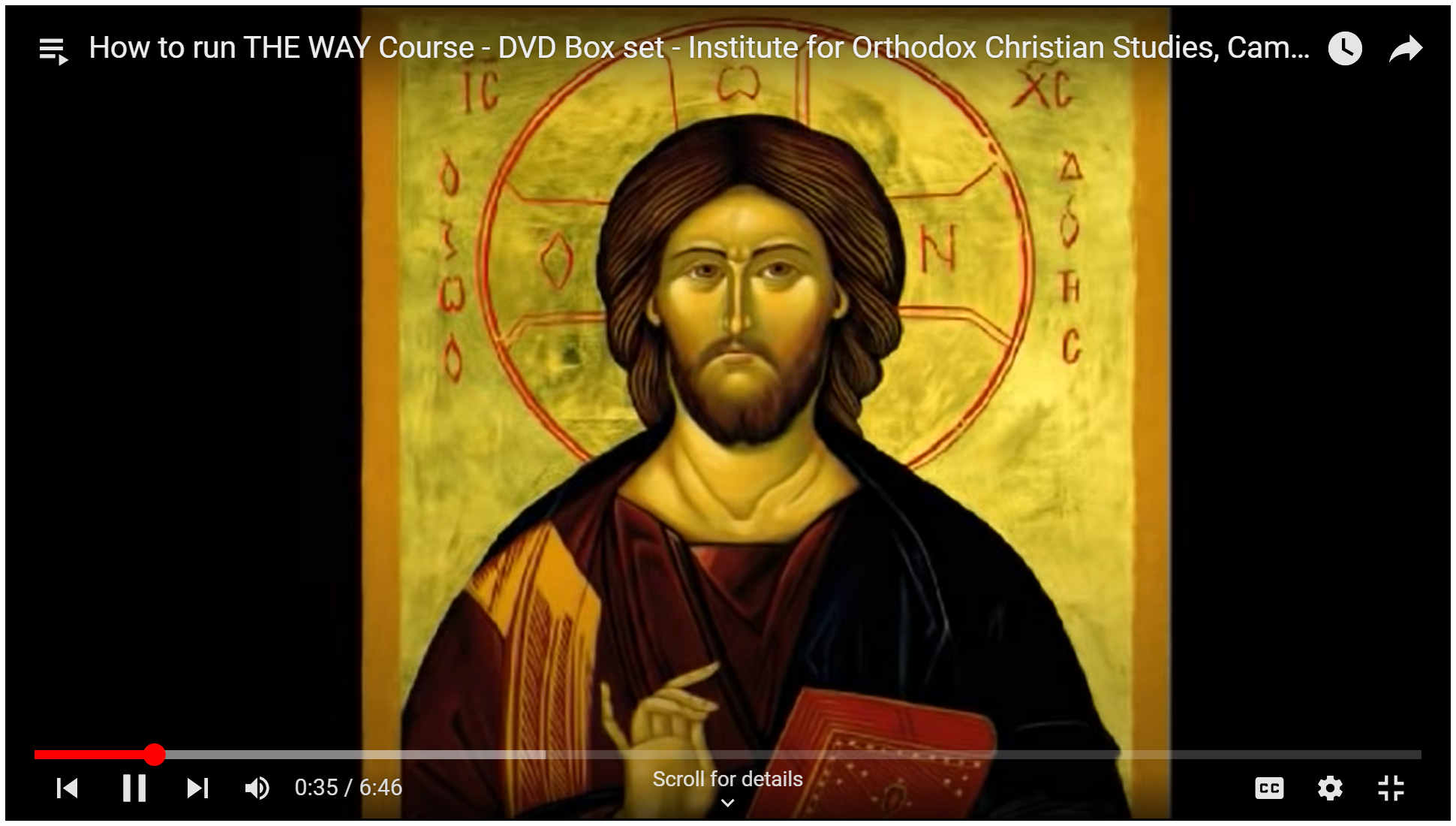 Simply put, "Yes." There is a Right Way. Jesus Christ established His Church upon the apostles and their confession of Him as the Christ, the Messiah - God's Anointed One. He is "the Way, the Truth and the Life" - click on the photo for details.
But what about all the denominations and confessions that call themselves Christian? Aren't these all acceptable variations of the Church? To answer that, we need to consider a few other questions:
First, did Christ say to Peter: "Upon this rock [Peter's confession that Jesus is the Christ, God's Anointed One] I will build a multitude of churches, each with a different set of doctrines and varying ways to worship me"? Of course not! Christ used the singular form, "Church" - one set of doctrines and one way to worship.
That's what a "church" (denomination or confession) is, or at least should be: the One Way. Only one truth can be true, the others are either a little untrue or way off-course. The alternative, that you can have your truth and I can have mine, that there are absolutely no absolutes and that's the absolute truth, is a logical absurdity. And yet, many modern denominations have fallen into this kind of relativism.
Secondly, didn't the organized church "go off the rails" when the last apostle died, or at least sometime shortly after Emperor Constantine adopted Christianity as the state religion? The notion of setting up the first-century Church as the ideal is commonly held among modern Protestants. The earlier Protestant reformers - Wycliffe, Luther, Zwingli, Calvin - however, were protesting not against the original Church of the first ten centuries, but rather against the more recent excesses and corruption of the Roman papacy such as total celibacy of the priesthood (that led to fornication and child molestation), selling forgiveness of sins ("indulgences") and selling higher clerical positions to the highest bidder ("simony").
The early reformers looked back longingly to original Christianity, the undivided Church of the first ten centuries, and its doctrines and form of worship. The Roman papacy had broken away from it in 1054 A.D. and eventually set itself up as the "Holy Roman Empire." During the Crusades, Rome attacked and plundered Constantinople, the capital of the Eastern Roman Empire, leaving it weakened and susceptible to the Muslim Turks, who finally captured the city in 1453 A.D. and renamed it Istanbul.
Hagia Sophia, the Cathedral of Holy Wisdom, was converted into a mosque, and the Patriarch of Constantinople was effectively put under house arrest, limited to just a few acres of territory, and stripped of any involvement in society. The "Orthodox" Church, the place of "right worship" (that is what "ortho-doxy" means) essentially ceased to function as an independent entity. Orthodoxy in Russia was also subjugated to the Muslim Mongols at about the same time. Thus the early reformers had nowhere else to turn, no alternative but to set up their own churches.
But after the "Magisterial Reformation" - so called because it retained the form of worship, doctrines, and hierarchical structure of early Christianity - came the "Radical Reformation" led by Thomas Muentzer, Andreas Karlstadt, Menno Simons, and others. These radicals, as the name implies, strove to do away with all hierarchy, liturgical forms of worship, and ornate art in church buildings. No bishops, no clerical garb, no set prayers, no statues or pictures of the saints... nothing was to be found in their church buildings except four plain walls, pews, and a pulpit. Some even went so far as to do away with seminary-trained, ordained pastors. This was not just a reformation, but a revolution - a complete overthrow of the old order.
Gradually over the centuries, however, the ideas of the Magisterial and Radical Reformations began to merge. Today we have denominations with no bishops and with pastors who are ordained with no seminary education (perhaps a two-year Bible college course after high school, but even that isn't absolutely necessary). Multicolored banners with little or no Christian symbols replace pictures or statues of the saints.
Some denominations still use traditional hymns, a choir, and a pulpit. More popular, though, is to use a "worship team," an electronic keyboard, drums, and guitars, but no pulpit: the preacher sits on a high stool with a microphone in front of him, or walks around the stage using a wireless microphone. In warmer climes the preacher's official garb is sandals, Bermuda shorts, and a Hawaiian shirt; in cooler places, it's sports shoes, blue jeans and a pastel (light blue, yellow or pink is "in") broadcloth shirt with the sleeves rolled up. Off-the-wall songs are projected by PowerPoint slides, often mixed together with video shows.
The result is a confusing medley of secular entertainment with an admixture of a few religious-sounding nice aphorisms such as "love one another," "acceptance" and "respect diversity." Thus the churches have become worldly and the secular world has become "churchy," all with little or no resemblance to original Christianity, the Church of the first ten centuries.
But what keeps the true, right-worshiping Church from either the tyranny of the papacy or the anarchy of the radical revolutionaries who think "It's every man for himself" (or "each person for themselves" if you prefer gender-less and ungrammatical English)? Are the only alternatives dictatorship or anarchy?
The early Church of the first ten centuries was organized by "godly men who are able to teach others," as St. Paul wrote to his disciple Timothy (2 Tim. 2:2). These "godly men" were called bishops, and they would meet together in councils in order to hash out problems that arose in doctrines and practice of worship. The infant Church of the first few centuries was certainly not ideal: it suffered from heresies and immorality, much like in later eras. In fact, ignorance of those early heresies - Gnosticism, Arianism, Nestorianism, Antinomianism, Modalism, Montanism, Universalism - that the early Church Councils condemned has tragically allowed many later would-be Christians to fall into some of these same errors.
Councils of bishops can sometimes get unruly: St. Athanasius punched out Arius for his heretical teachings. The iconoclasts at one time seized the majority and for a hundred years went about destroying icons, burning churches that contained them and even killing those who venerated the saints represented by icons. This was repeated, sadly, during the Radical Reformation.
But councils of bishops represent the best of the democratic process: godly men who are motivated by Christian principles of love and truth coming together to vote on issues of the day. Winston Churchill, when asked what was the worst form of government, replied: "Democracy... unless you consider the alternatives!" The alternatives to godly men - bishops - meeting in councils is either dictatorship of the papacy, or anarchy in which each man is a pope unto himself.
Does this mean that the Orthodox Church is perfect? No, it's still a work in process: bad apples do sometimes appear, but the Church's conciliar structure provides a self-correcting mechanism that preserves unity while avoiding heresy. Individual believers pray dozens of times in their worship, "Lord, have mercy!" because we confess that we are each "the chief of sinners." We know we must "first remove the beam out of our own eye, and then we can see clearly to remove the speck out of our brother's eye."
Yet at the same time, we acknowledge that Christ is the "head over all things for the Church, which is His Body, the fullness of Him who fills all in all" (Eph. 1:22b-23). The fullness of Christ is to be found not in individual believers, but in His Body, the Church.
If you'd like to find out more about "the Way, the Truth and the Life" go to this web page: https://discover-original-christianity.info/the_way.htm - you can watch the twelve-video course now on YouTube!
You can read our whole newsletter at https://agape-restoration-society.org/ARC-News/a-n_2026-07-25.htm, and share it!



No comments:
Post a Comment