Saturday, July 25, 2026

IS THERE A RIGHT WAY TO WORSHIP?


IS THERE A RIGHT WAY TO WORSHIP?


(This essay is from a blog article that I posted on July 5, 2013. I'm deleting that old blog site, so I'm preserving the article here.)
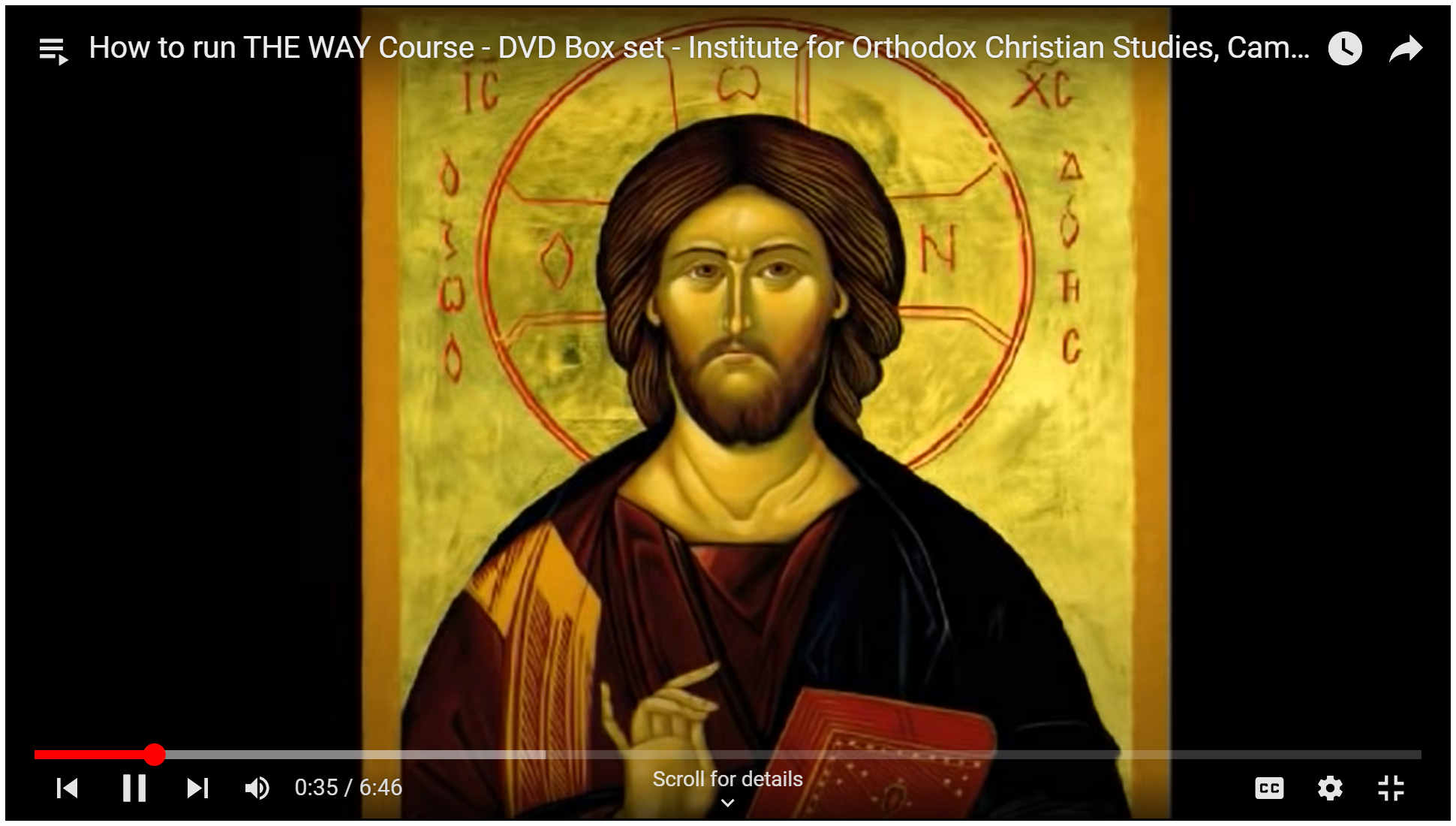
TheWay video course Simply put, "Yes." There is a Right Way. Jesus Christ established His Church upon the apostles and their confession of Him as the Christ, the Messiah - God's Anointed One. He is "the Way, the Truth and the Life" - click on the photo for details.

But what about all the denominations and confessions that call themselves Christian? Aren't these all acceptable variations of the Church? To answer that, we need to consider a few other questions:

First, did Christ say to Peter: "Upon this rock [Peter's confession that Jesus is the Christ, God's Anointed One] I will build a multitude of  churches, each with a different set of doctrines and varying ways to worship me"? Of course not! Christ used the singular form, "Church" - one set of doctrines and one way to worship.

That's what a "church" (denomination or confession) is, or at least should be: the One Way. Only one truth can be true, the others are either a little untrue or way off-course. The alternative, that you can have your truth and I can have mine, that there are absolutely no absolutes and that's the absolute truth, is a logical absurdity. And yet, many modern denominations have fallen into this kind of relativism.

Secondly, didn't the organized church "go off the rails" when the last apostle died, or at least sometime shortly after Emperor Constantine adopted Christianity as the state religion? The notion of setting up the first-century Church as the ideal is commonly held among modern Protestants. The earlier Protestant reformers - Wycliffe, Luther, Zwingli, Calvin - however, were protesting not against the original Church of the first ten centuries, but rather against the more recent excesses and corruption of the Roman papacy such as total celibacy of the priesthood (that led to fornication and child molestation), selling forgiveness of sins ("indulgences") and selling higher clerical positions to the highest bidder ("simony").

The early reformers looked back longingly to original Christianity, the undivided Church of the first ten centuries, and its doctrines and form of worship. The Roman papacy had broken away from it in 1054 A.D. and eventually set itself up as the "Holy Roman Empire." During the Crusades, Rome attacked and plundered Constantinople, the capital of the Eastern Roman Empire, leaving it weakened and susceptible to the Muslim Turks, who finally captured the city in 1453 A.D. and renamed it Istanbul.

Hagia Sophia, the Cathedral of Holy Wisdom, was converted into a mosque, and the Patriarch of Constantinople was effectively put under house arrest, limited to just a few acres of territory, and stripped of any involvement in society. The "Orthodox" Church, the place of "right worship" (that is what "ortho-doxy" means) essentially ceased to function as an independent entity. Orthodoxy in Russia was also subjugated to the Muslim Mongols at about the same time. Thus the early reformers had nowhere else to turn, no alternative but to set up their own churches.

But after the "Magisterial Reformation" - so called because it retained the form of worship, doctrines, and hierarchical structure of early Christianity - came the "Radical Reformation" led by Thomas Muentzer, Andreas Karlstadt, Menno Simons, and others. These radicals, as the name implies, strove to do away with all hierarchy, liturgical forms of worship, and ornate art in church buildings. No bishops, no clerical garb, no set prayers, no statues or pictures of the saints... nothing was to be found in their church buildings except four plain walls, pews, and a pulpit. Some even went so far as to do away with seminary-trained, ordained pastors. This was not just a reformation, but a revolution - a complete overthrow of the old order.

Gradually over the centuries, however, the ideas of the Magisterial and Radical Reformations began to merge. Today we have denominations with no bishops and with pastors who are ordained with no seminary education (perhaps a two-year Bible college course after high school, but even that isn't absolutely necessary). Multicolored banners with little or no Christian symbols replace pictures or statues of the saints.

Some denominations still use traditional hymns, a choir, and a pulpit. More popular, though, is to use a "worship team," an electronic keyboard, drums, and guitars, but no pulpit: the preacher sits on a high stool with a microphone in front of him, or walks around the stage using a wireless microphone. In warmer climes the preacher's official garb is sandals, Bermuda shorts, and a Hawaiian shirt; in cooler places, it's sports shoes, blue jeans and a pastel (light blue, yellow or pink is "in") broadcloth shirt with the sleeves rolled up. Off-the-wall songs are projected by PowerPoint slides, often mixed together with video shows.

The result is a confusing medley of secular entertainment with an admixture of a few religious-sounding nice aphorisms such as "love one another," "acceptance" and "respect diversity." Thus the churches have become worldly and the secular world has become "churchy," all with little or no resemblance to original Christianity, the Church of the first ten centuries.

But what keeps the true, right-worshiping Church from either the tyranny of the papacy or the anarchy of the radical revolutionaries who think "It's every man for himself" (or "each person for themselves" if you prefer gender-less and ungrammatical English)? Are the only alternatives dictatorship or anarchy?

The early Church of the first ten centuries was organized by "godly men who are able to teach others," as St. Paul wrote to his disciple Timothy (2 Tim. 2:2). These "godly men" were called bishops, and they would meet together in councils in order to hash out problems that arose in doctrines and practice of worship. The infant Church of the first few centuries was certainly not ideal: it suffered from heresies and immorality, much like in later eras. In fact, ignorance of those early heresies - Gnosticism, Arianism, Nestorianism, Antinomianism, Modalism, Montanism, Universalism - that the early Church Councils condemned has tragically allowed many later would-be Christians to fall into some of these same errors.

Councils of bishops can sometimes get unruly: St. Athanasius punched out Arius for his heretical teachings. The iconoclasts at one time seized the majority and for a hundred years went about destroying icons, burning churches that contained them and even killing those who venerated the saints represented by icons. This was repeated, sadly, during the Radical Reformation.

But councils of bishops represent the best of the democratic process: godly men who are motivated by Christian principles of love and truth coming together to vote on issues of the day. Winston Churchill, when asked what was the worst form of government, replied: "Democracy... unless you consider the alternatives!" The alternatives to godly men - bishops - meeting in councils is either dictatorship of the papacy, or anarchy in which each man is a pope unto himself.

Does this mean that the Orthodox Church is perfect? No, it's still a work in process: bad apples do sometimes appear, but the Church's conciliar structure provides a self-correcting mechanism that preserves unity while avoiding heresy. Individual believers pray dozens of times in their worship, "Lord, have mercy!" because we confess that we are each "the chief of sinners." We know we must "first remove the beam out of our own eye, and then we can see clearly to remove the speck out of our brother's eye."

Yet at the same time, we acknowledge that Christ is the "head over all things for the Church, which is His Body, the fullness of Him who fills all in all" (Eph. 1:22b-23). The fullness of Christ is to be found not in individual believers, but in His Body, the Church.

If you'd like to find out more about "the Way, the Truth and the Life" go to this web page:  https://discover-original-christianity.info/the_way.htm - you can watch the twelve-video course now on YouTube!


You can read our whole newsletter at https://agape-restoration-society.org/ARC-News/a-n_2026-07-25.htm, and share it!



Thursday, July 9, 2026

HOW TO RELATE TO FOREIGNERS AMONG US


HOW TO RELATE TO FOREIGNERS AMONG US


Befriending the Foreigner (This is an essay that I wrote on Jan. 30, 2017, but is especially relevant today:)

As Christians, we are commanded to care for the foreigners ("strangers") among us, because like the Old Testament Israelites living in exile, we too are foreigners in a foreign land - this world is not our home. For centuries after Jesus Christ lived, died and rose from the dead, Christians were a discriminated-against minority in the Greco-Roman world.

Alec Hill, former president of InterVarsity Christian Fellowship, under whom I worked and highly respect, posted the following on Facebook:

Throughout Scripture, the Lord commands us to care for the displaced/stranger/alien/refugee. The following three passages are illustrative:

Leviticus 19:34
“When a stranger resides with you in your land, you shall not do him wrong. The stranger who resides with you shall be to you as the native among you, and you shall love him as yourself, for you were aliens in the land of Egypt; I am the LORD your God.”

Isaiah 16:4
“Hide the fugitives, do not betray the refugees. Let the Moabite fugitives stay with you; be their shelter from the destroyer.”

Matthew 25:34-40
“Then the King will say to those on his right, ‘come, you who are blessed of my Father, inherit the kingdom prepared for you from the foundation of the world. For I was hungry, and you gave me something to eat; I was thirsty, and you gave me something to drink; I was a stranger, and you invited me in; naked, and you clothed me; I was sick, and you visited me; I was in prison, and you came to me.’ Then the righteous will answer Him, ‘Lord, when did we see you hungry, and feed you, or thirsty, and give you something to drink? And when did we see you a stranger, and invite you in, or naked, and clothe you? When did we see you sick, or in prison, and come to you?’ The King will answer and say to them, ‘truly I say to you, to the extent that you did it to one of these brothers of mine, even the least of them, you did it to me.’"

There are many more such Scripture passages emphasizing our duty to care for the needy foreigners among us. In the discussion of this current issue, however, we need to examine contrasting Scripture passages on how to relate to foreigners in our midst. David Klinghofer has written an excellent article, "What the Scriptures Say About Immigration," posted last year on Beliefnet.org and reposted here: http://www.discovery.org/a/3475, from which I quote a few excerpts:

"The classic instance is Ruth, the Moabite. She had a Jewish mother-in-law, Naomi, whom she met when Naomi’s family fled the land of Israel and moved to neighboring Moab to escape a famine. When Ruth’s husband, Naomi’s son, died, along with Naomi’s husband and her other son, Ruth decided to return with the older woman to Israel. Said Ruth, “For where you go, I will go; where you lodge, I will lodge; your people are my people, and your God is my God; where you die, I will die, and there I will be buried. Thus may the Lord do to me, and so may He do more, if anything but death separates me from you” (Ruth 1:16-17).

"Notice that the main thrust of her speech is the passionate joining of her own fate with Naomi’s, and thus with Israel’s. To this day, that remains the primary criterion by which potential converts to Judaism are evaluated. Ruth thus became, according to Jewish tradition, history’s most beloved “proselyte” or “convert” to Judaism—a status celebrated at the Jewish festival of Shavuot... when her story is chanted in synagogues."

Notice carefully what Ruth said: "Your God is my God." She adopted the religion of Israel. This is what was expected of foreigners who came to Israel. When Abram was given the covenant of circumcision and his name was changed to Abraham, God commanded him to circumcise all of the males in his household, including his slaves:

"Abraham was ninety-nine years old when he was circumcised in the flesh of his foreskin. And Ishmael his son was thirteen years old when he was circumcised in the flesh of his foreskin. That very day Abraham and his son Ishmael were circumcised. And all the men of his house, those born in the house and those bought with money from a foreigner, were circumcised with him." (Gen. 17:24-27)

This became the standard or rule for following generations in Israel, expecting foreigners to adopt the Jewish religion and follow its laws:

"If a stranger shall sojourn with you and would keep the Passover to the LORD, let all his males be circumcised. Then he may come near and keep it; he shall be as a native of the land. But no uncircumcised person shall eat of it. There shall be one law for the native and for the stranger who sojourns among you. (Ex. 12:48-49)

"Likewise, when a foreigner, who is not of your people Israel, comes from a far country for the sake of your great name and your mighty hand and your outstretched arm, when he comes and prays toward this house, hear from heaven your dwelling place and do according to all for which the foreigner calls to you, in order that all the peoples of the earth may know your name and fear you, as do your people Israel, and that they may know that this house that I have built is called by your name." (2 Chron. 6:32-33)

In his article, Klinghofer continues along this line:

"The subject of conversion isn’t quite so simple, however. For there are actually two sub-classes grouped under the category of the “ger.” There is the ger, the convert, like Ruth–a full member of Israel. But there is another, the ger toshav, or resident alien.

"The latter occupies a middle ground between Jew and foreigner. It is this individual whom Jews are, in the verse we saw earlier, commanded to provide for: “If your brother becomes impoverished and his means falter in your proximity, you shall strengthen him—stranger or resident (ger v’toshav) – so that he can live with you” (Leviticus 25:35).

"This resident alien too must fulfill criteria to join his new society, agreeing to certain basic moral propositions, including forswearing idolatry, murder, and sexual immorality. He is called a “resident alien” because it is only having satisfied this condition that a non-Israelite who doesn’t formally convert may live in the Holy Land. While inviting us to admire and love a person who would give up his citizenship in a foreign country to join our own, the Bible also commands us to give material aid, whatever is needed, to any immigrant—if he agrees to abide by an unwavering moral law.

"Here is where the Bible may be hard for a modern reader to accept, for scriptural tradition expects that any immigrant, any ger, will meet demanding moral criteria. It is not an undiscriminating welcome. The idea that a sojourner would be allowed to live in the land without having accepted the two sets of conditions is unthinkable: 'They shall not dwell in your land lest they cause you to sin against Me, that you will worship their gods, for it will be a trap for you' (Exodus 23:33)."

Let us look at the context of this last quotation: "And I will set your border from the Red Sea to the Sea of the Philistines, and from the wilderness to the Euphrates, for I will give the inhabitants of the land into your hand, and you shall drive them out before you. You shall make no covenant with them and their gods. They shall not dwell in your land, lest they make you sin against me; for if you serve their gods, it will surely be a snare to you." (Ex. 23:31-33)

The definition of a nation is that it shares a common culture and common laws. There can't be contradictory cultural norms and laws if  "this nation or any nation may long endure," as Abraham Lincoln said in his Gettysburg Address. Further along this line:

"Take care, lest you make a covenant with the inhabitants of the land to which you go, lest it become a snare in your midst. You shall tear down their altars and break their pillars and cut down their Asherim." (Ex. 34:12-13)

"And if a stranger sojourns among you and would keep the Passover to the LORD, according to the statute of the Passover and according to its rule, so shall he do. You shall have one statute, both for the sojourner and for the native." (Num. 9:14)

"And if a stranger is sojourning with you, or anyone is living permanently among you, and he wishes to offer a food offering, with a pleasing aroma to the LORD, he shall do as you do. For the assembly, there shall be one statute for you and for the stranger who sojourns with you, a statute forever throughout your generations. You and the sojourner shall be alike before the LORD. One law and one rule shall be for you and for the stranger who sojourns with you." (Num. 15:14-16)

"Speak to the people of Israel and say to them, When you pass over the Jordan into the land of Canaan, then you shall drive out all the inhabitants of the land from before you and destroy all their figured stones and destroy all their metal images and demolish all their high places." (Num. 33:51-52)

" And you shall consume all the peoples that the LORD your God will give over to you. Your eye shall not pity them, neither shall you serve their gods, for that would be a snare to you." (Deut. 7:16)

"When the LORD your God cuts off before you the nations whom you go in to dispossess, and you dispossess them and dwell in their land, take care that you be not ensnared to follow them, after they have been destroyed before you, and that you do not inquire about their gods, saying, 'How did these nations serve their gods?—that I also may do the same.' You shall not worship the LORD your God in that way, for every abominable thing that the LORD hates they have done for their gods, for they even burn their sons and their daughters in the fire to their gods." (Deut. 12:29-31)

"For if you turn back and cling to the remnant of these nations remaining among you and make marriages with them, so that you associate with them and they with you, know for certain that the LORD your God will no longer drive out these nations before you, but they shall be a snare and a trap for you, a whip on your sides and thorns in your eyes, until you perish from off this good ground that the LORD your God has given you." (Josh. 23:12-13)

"And you shall make no covenant with the inhabitants of this land; you shall break down their altars. But you have not obeyed my voice. What is this you have done? So now I say, I will not drive them out before you, but they shall become thorns in your sides, and their gods shall be a snare to you." (Judges 2:2-3)

"They despised his statutes and his covenant that he made with their fathers and the warnings that he gave them. They went after false idols and became false, and they followed the nations that were around them, concerning whom the LORD had commanded them that they should not do like them. And they abandoned all the commandments of the LORD their God, and made for themselves metal images of two calves; and they made an Asherah and worshiped all the host of heaven and served Baal." (2 Kings 17:15-16)

From all of the above Scripture passages, we can see that there must be a balance between welcoming the stranger who is in need and preserving our own faith, laws and cultural norms. Major cities in Europe such as London, Paris, Bonn and Berlin now have Muslim neighborhoods where it is dangerous for a European native to walk, especially for a woman who does not wear a veil. Dearborn and Detroit are becoming similar. Liberal democracy only works when all people – citizens and resident aliens alike – abide by the same set of values and laws. But when the majority is liberal and tolerant while the minority is rigid and insists on the rest bend to its demands, there's trouble ahead.

Robert D. Hosken, M.Min., M.Th.S., D.Min.


You can read our whole newsletter at https://agape-restoration-society.org/ARC-News/a-n_2026-07-11.htm, and share it!


IS THERE A RIGHT WAY TO WORSHIP?

  IS THERE A RIGHT WAY TO WORSHIP?     (This essay is from a blog article that I posted on July 5, 2013. I'm deleting that old blog ...