WHAT'S THE BIG FUSS ABOUT JUDE AND JEZEBEL?
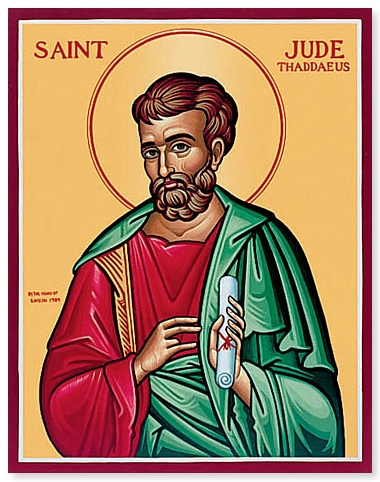 The Apostle Jude is a puzzling character: in Matthew 13:55 and Mark 6:3 he's called the "brother" of the Lord along with James, who later became the leader of the church in Jerusalem after the other James, the Apostle, was killed by Herod. But we find no more details about Jude other than the above verses in Matthew and Mark and in the lists of the twelve Apostles where sometimes he is called Thaddeus. In his epistle, he begins by saying he wanted to write encouraging words about the faith once for all transmitted to the saints. But then he changes course, deciding rather to write about those who were distorting our common faith:
"For there are certain people who crept in secretly, even those who were long ago written about for this condemnation: ungodly men, perverting the grace of our God into unbridled lust, and denying our only Master, God, and Lord, Jesus Christ. Now I desire to remind you, though you already know this, that the Lord, having saved a people out of the land of Egypt, afterward destroyed those who didn't believe. Angels who didn't keep their first domain, but deserted their own dwelling place, he has kept in everlasting bonds under darkness for the judgment of the great day. Even as Sodom and Gomorrah, and the cities around them, having, in the same way as these, given themselves over to sexual immorality and pursued unnatural desire, are set forth as an example, suffering the punishment of eternal fire" (Jude 1:3-7).
Jude is writing about ungodly people who've managed to sneak into the church, and begin distorting the liberty we have by the grace of God into perversion and unbridled lust. This isn't anything new: St. Paul also warned the leaders of the church in Ephesus – "I know that after my departure, vicious wolves will enter in among you, not sparing the flock. Men will arise from among your own selves, speaking perverse things, to draw away the disciples after them" (Acts 20:29-30). This is precisely what's been sprouting up in various churches and denominations in the last few decades. Their leaders might have attended seminary and gotten ordained into the ministry, but they have never walked the narrow road of repentance and striving toward holiness. Instead, they dress up their perversion, lust, and unnatural desire with religious jargon and pious phrases such as "love is love," "choice," "freedom in Christ," "inclusion," and "non-discrimination." You have likely seen churches decorated with rainbow banners and ordained men and women wearing rainbow-colored sashes or robes.
Our freedom in Christ – "liberty" – can be distorted into libertinism and license to commit sexual immorality, homosexual acts, and abortion, justifying one's actions by citing new laws that permit such behavior. We need to keep in mind what the Apostle Paul wrote – "'All things are lawful for me,' but not all things are profitable. 'All things are lawful for me,' but not all things build up" (1 Corinthians 10:23). Recent changes in the laws regarding sexual conduct, marriage and divorce have legalized behavior that was formerly illegal: now "all things are lawful" but they are not profitable or constructive; instead, they are unprofitable and destructive for both the individuals and for society. "Living together" outside of marriage (fornicating) often doesn't last, or leads to unfaithfulness if a couple eventually marries, and/or easy, no-fault divorce. The toll it takes on children is terrible: one only has to study the heartbreaking statistics.
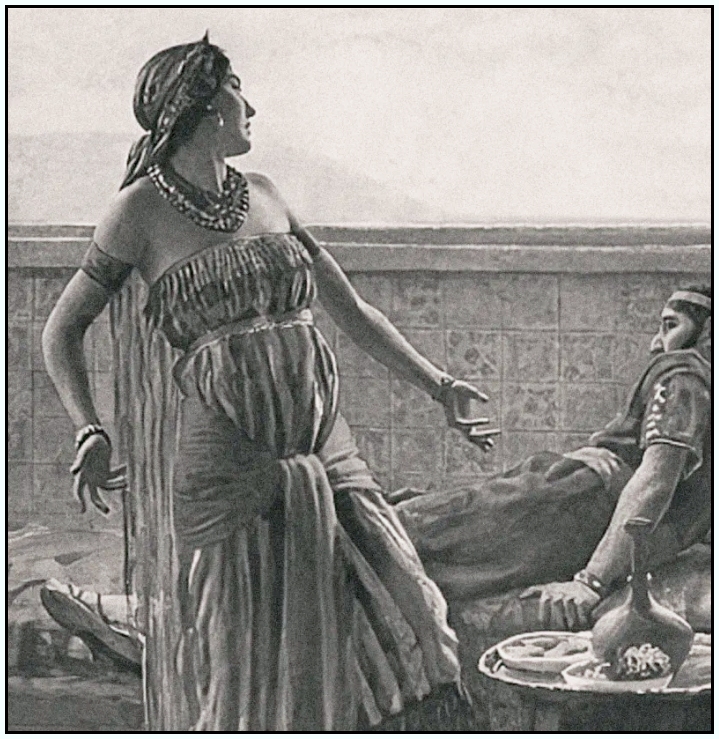 What about Jezebel? We read in Revelation 2:20-23 – "But I have this against you, that you tolerate your woman, Jezebel, who calls herself a prophetess. She teaches and seduces my servants to commit sexual immorality, and to eat things sacrificed to idols. I gave her time to repent, but she refuses to repent of her sexual immorality. Behold, I will throw her into a bed, and those who commit adultery with her into great oppression, unless they repent of her works."
The author, the Apostle John, had first commended the church in Thyatira for its "love, faith, service, patient endurance, and good works" (v. 19), but all that does not excuse sexual immorality and adultery. In many liberal denominations, the pastors (often women) and people are engaged in social service and other good works, but also "tolerate Jezebel" – the notion that what really matters is the "social gospel" and one's private behavior is nobody else's business. "Social" morality cannot be separated from "personal" morality: it's not either-or, it's both-and.
Jeremiah 48:10 states – "Cursed be he who does the work of the Lord negligently; and cursed be he who keeps back his sword from blood." This verse is in the context of God's judgments on the pagan practices of the nations surrounding Israel, but also on Israel itself (v. 13). The kings and priests of Israel had let matters of morality slide, and so the people slid into the same sorts of pagan practices as the nearby nations: sexual immorality and child sacrifice (abortion: killing the unwanted products of immorality and incineratining the bodies of the babies) as an offering to Baal and Chemosh, the nearby pagan gods. And all the while, the religious leaders would negligently turn a blind eye. The same thing happens today when priests or pastors commit immoral acts: it's ignored or they're reassigned to another town, or they get just "a slap on the wrist" of two years' or just several months' leave of absence, then are moved in a different church where their behavior continues. No! They must be permanently removed from ministry. See "The History and Consequences of Mandatory Celibacy." There are no secret sins in God's sight!
"For what business is it of mine to judge people outside the church? Do you not judge those inside?" (2 Corinthians 5:12). "For the time has come for judgment to begin at the house of God. If it begins first with us, what will happen to those who do not obey the gospel of God?" (1 Peter 4:17). When interacting with those outside the church, we shouldn't harshly judge or condemn them: we can't expect pagans to act like Christians! Instead, we must gently speak the truth in the love of God to imperfect, hurting human beings – you attract more flies with honey than with vinegar.
But we must be firm with those within the church, especially the ordained clergy, who continue to violate the historical standards of Christian morality: "Have no fellowship with the unfruitful works of darkness, but rather even expose them. For the things which are done by them in secret, it is a shame even to speak of. But all things, when they are exposed, are revealed by the light, for everything that is revealed is light" (Ephesians 5:11-13). And "For what if some were unfaithful? Will their faithlessness nullify the faithfulness of God? May it never be! Yes, let God be found true, but every man a liar. As it is written, 'That you might be justified in your words, And might prevail when you come into judgment'" (Romans 3:3-4). Sweeping scandals under the rug causes offense to both Christians and non-Christians, but upholding the faithfulness of God builds up the Body of Christ, the Church!
"He gave some to be Apostles; and some, prophets; and some, evangelists; and some, pastors and teachers, to equip the saints to do the work of ministering to build up the body of Christ; until we all attain to the unity of the faith, and of the knowledge of the Son of God, to a mature, perfect man, to the measure of the stature of the fullness of Christ" (Ephesians 4:11-13).
You can read our whole newsletter at https://agape-restoration-society.org/ARC-News/a-n_2026-11-07.htm, and share it!
 The theology of St. Maximus the Confessor (580-662) suggests he may have been sympathetic to universalism, as some interpretations of his writings indicate a belief in a universal renewal of the whole human race. However, there is debate among scholars about the extent of his views on universal salvation. Please read John 3:16-9 and 2 Thessalonians 1:6-9 about this issue. His writings reflect a vision where all of humanity could ultimately be restored or transformed. There is ongoing debate among scholars regarding the extent of Maximus's belief in universal salvation. Some argue that while he expressed ideas that align with universalism, he did not explicitly endorse it as a definitive doctrine. St. Maximus the Confessor's key writings on universalism include his "Questions and Doubts," where he discusses the concept of apokatastasis, and his "Ad Thalassium," which appears to contain affirmations of universal salvation.


