THE MESSIAH IS BORN! GLORIFY HIM!
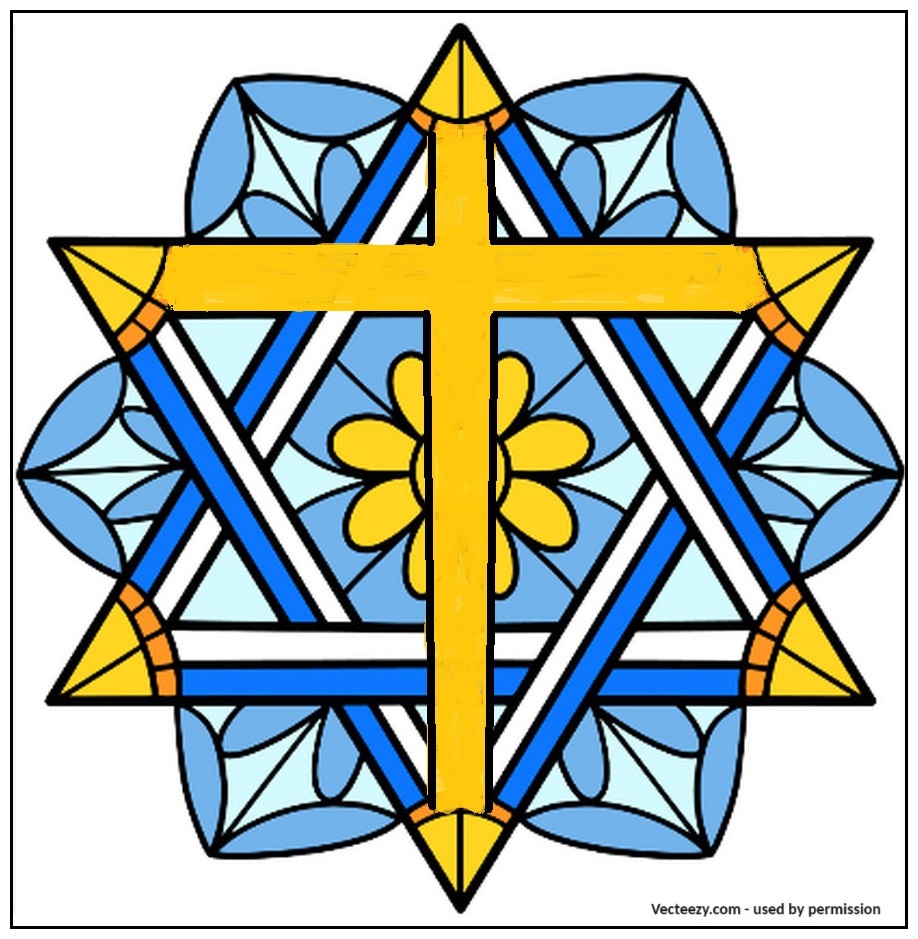 “For unto us a Child is born, unto us a Son is given, and His name shall be called Wonderful, Counselor, the Mighty God, the Everlasting Father, the Prince of Peace” – Isaiah 9:6. This prophecy was given to Isaiah about 800 years before the Messiah was born! "Messiah" translated into Greek became "Khristos" – both mean "the Annointed One." So the Messiah or Khristos (Christ) is the fulfillment of ancient Jewish prophecies.
What we today call "Christianity" doesn't go back into the first century A.D. That's an "anachronism" – projecting today's ideas back into the past. Well into the second century, what was called "the followers of the Way" was just another sect of the Jewish religion, like the Pharisees, the Saduccees, the Scribes, the Zealots, and the Essenes.
In the Dispersion were also groups of Jews who would "prosyletize" among the Gentiles, which led them to confront the followers of the Way, insisting that Gentiles must be circumcised and follow the Mosaic Law if these converts wanted to believe in the Messiah. After the destruction of the Jerusalem Temple in 70 A.D., the Jews denounced followers of the the Way for fleeing the city, leaving the other Jews to be slain by the Romans. When the Messianic Jews and Gentiles later came to power in the Byzantine Empire, they sadly "returned the favor," denouncing the Jews. Thus began anti-Semitism.
We read in Acts 11:26 that the disciples of Yeshua, the followers of the Way, were first called "Christians" in Antioch, so we might assume that the term "Christians" was coined when shortly after Pentecost in 33 A.D, Barnabas and Saul established the first mixed community of Gentiles and Jews in Antioch. But according to early Church history, it was Euodius, the second Bishop of Antioch, who coined the term "Christians" – sometime after Peter, the first Bishop in Antioch, had been arrested and sent to Rome for his trial and crucifixion, around 64 A.D.
So the term "Christianity" itself only began to be widely used in the second century (the 100s A.D.) as the followers of the Way grew and began to develop distinct doctrines and practices separate from Judaism. Up through this time, they often met in synagogues and adapted forms and symbols of worship such as the Torah scrolls (their only "Bible" until 397 A.D.) set on a holy table, the menorah, incense, and bells. By this time, the followers of Jesus had formed organized communities under intense persecution.
Only by the third century (the 200s A.D.), after the Apostolic Fathers of the first and second centuries, the Ante-Nicene Fathers were the ones whose writings before the First Ecumenical Council of Nicaea in 325 (ante-nicene meaning before Nicaea) began to define what we call "Christianity" today. The Nicene Creed of 325 A.D. codified it as a fixed set of doctrines. Only at the Council of Carthage in 397 A.D. was the New Testament canon recognized. The Holy Writings were mostly still on scrolls (bound books were very rare), and the menorah, incense, and bells continue to be used up to today in liturgical churches.
This liturgical form of worship was what defined "Christianity" up to Gutenberg's invention of the printing press and moveable type around 1440, which allowed for the mass production of books and significantly increased the availability of printed materials. This invention played a crucial role in the Enlightenment and the Protestant Reformation in 1517. In fact, Protestantism would have been impossible without the printing press because it was based on the idea of "Sola Scriptura" – "only the Scriptures" – which only became widely available after 1440. Up until then, only monks in monasteries and a few churches had hand-copied copies of the Scriptures.
Rod Dreher in a recent article brought up a significant concept: "This idea of [elite] Europe is shared by the pan-European ruling class, both in government and in private institutions. It is a secular form of clericalism. Clericalism is the idea that the Church is the clergy [and monls in monasteries], and the people in the pews are just hangers-on." Secular clericalism is what has resulted from universities in the Middle Ages developing out of monasteries which were the elite storehouse of learning and have gradually turned into today's secularized elite, educated class that dominates mainstream media, potificating on what we must think.
The article "Ten years of reporting on a fault line" by religion reporter Terry Mattingly states: "America now contains two basic world views, which he called 'orthodox' and 'progressive.' The orthodox believe it's possible to follow transcendent, revealed truths. The progressives disagree and put their trust in personal experience, even if that requires them to 'resymbolize historic faiths according to the prevailing assumptions of contemporary life'." The term "progressive" should rather be called "relativist" because "progressive" implies making progress toward a goal, but "relativist" implies that there are no fixed goals or absolutely. eternally true truths at all. Modernity is fluid, not fixed.
The result is that the secular-clericalist elite 'progressives' control the levels of power in society: in the mass media, the educational institutions, much of the leadership in politics. in business, and is even seeping into some churches. The old clericalism of the Church has been relegated to "the dustbin of history" according to the new secular-clericalist elite. But the menorah, incense, and bells haven't disappeared: they're still to be found in the Eastern Orthodox Church, along with the fixed and unchanging Nicene Creed.
Pray for people to return to the form and substance of the Early Church: the menorah, incense, and bells – the form; and the fixed and unchanging Nicene Creed – the substance. Let us remember that the Messiah born 2,000 years ago is the fulfillment of the Jewish faith!
You can read the rest of our newsletter at https://agape-restoration-society.org/ARC-News/a-n_2025-12-20.htm, and share it! Also, create your own website for less than $4 per month!